






































Discovering New Worlds: The Habitable Worlds Observatory’s High-Resolution Imager Revolutionizes Astrophysics | PRIMENEWSNOW
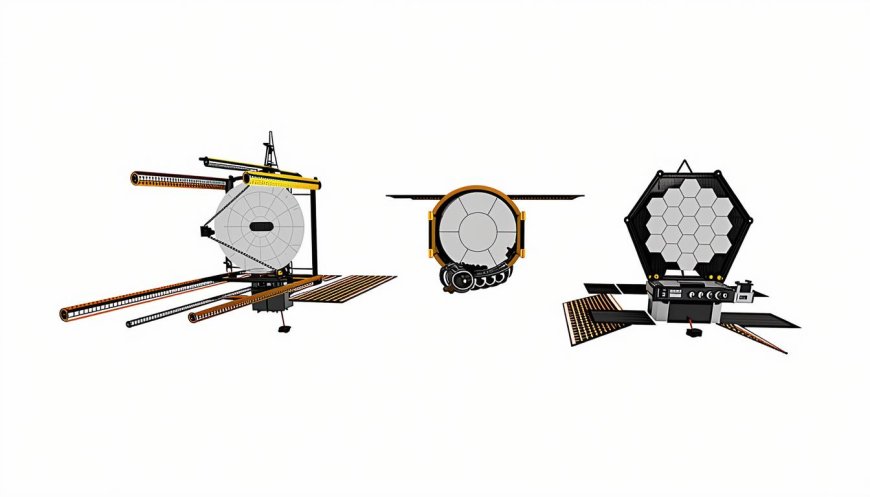
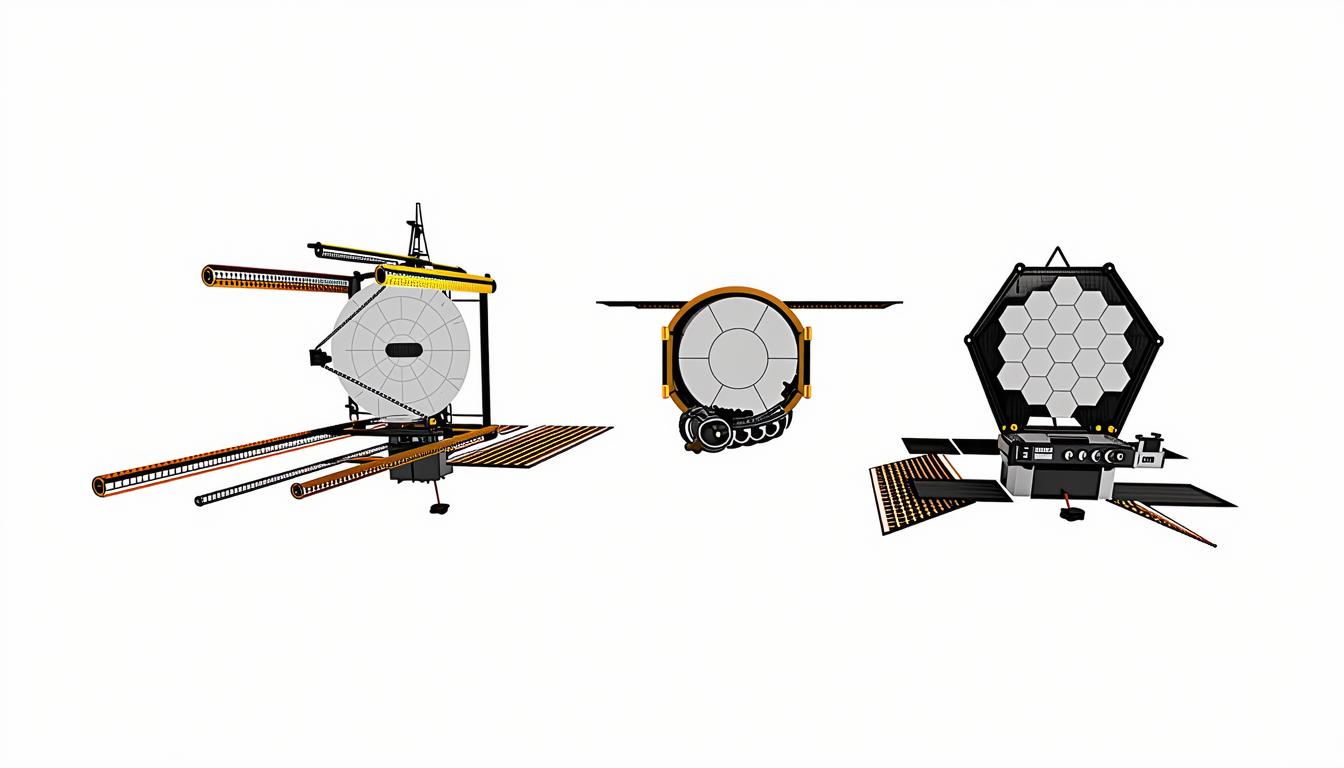

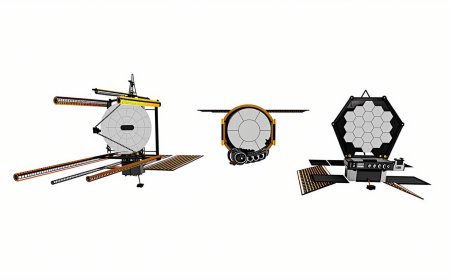
The image showcases three conceptual designs of the Habitable Worlds Observatory (HWO). From right to left, these are Engineering Architecture Concepts (EACs) 1, 2, and 3. Each design includes baffles to shield the mirror and minimize stray light, though these are not depicted for clarity. EAC-1 features a 6-meter, segmented, off-axis telescope. EAC-2 shares this structure but incorporates a round keystone mirror with surrounding segments. EAC-3 is an 8-meter on-axis telescope with circular segments. Image courtesy of NASA Goddard/Conceptual Image Labs.
Exploring New Frontiers: The Habitable Worlds Observatory
Set to become NASA’s leading space telescope in the 2040s, the Habitable Worlds Observatory (HWO) aims to revolutionize our understanding of life beyond Earth and significantly advance various fields of astrophysics.
International Collaboration and UK Leadership
NASA is actively seeking global partners, and the United Kingdom is in a prime position to spearhead the development of the observatory’s imaging camera, which is expected to be a key component in capturing the public’s imagination.
Early involvement in this mission could yield substantial returns for the UK’s space industry, fostering leadership in space science, technology, and astrophysics for future generations.
Contributors and Research Impact
The project involves a diverse team of experts, including Vincent Van Eylen, Richard Massey, Saeeda Awan, and many others, contributing to a white paper submitted to the UK Space Agency’s “UK Space Frontiers 2035” initiative. This collaboration highlights the interdisciplinary nature of the mission, spanning instrumentation, planetary astrophysics, and galaxy studies.
For more detailed insights, the white paper can be accessed via this link. The submission history and additional information are available on arXiv.
Astrobiology and Exoplanetary Science
The HWO is poised to make significant contributions to astrobiology and the study of exoplanets, potentially uncovering new insights into the conditions necessary for life beyond our solar system.
What's Your Reaction?
 Like
0
Like
0
 Dislike
0
Dislike
0
 Love
0
Love
0
 Funny
0
Funny
0
 Angry
0
Angry
0
 Sad
0
Sad
0
 Wow
0
Wow
0