





























ASU Grad Proves Science Runs in the Family | PRIMENEWSNOW

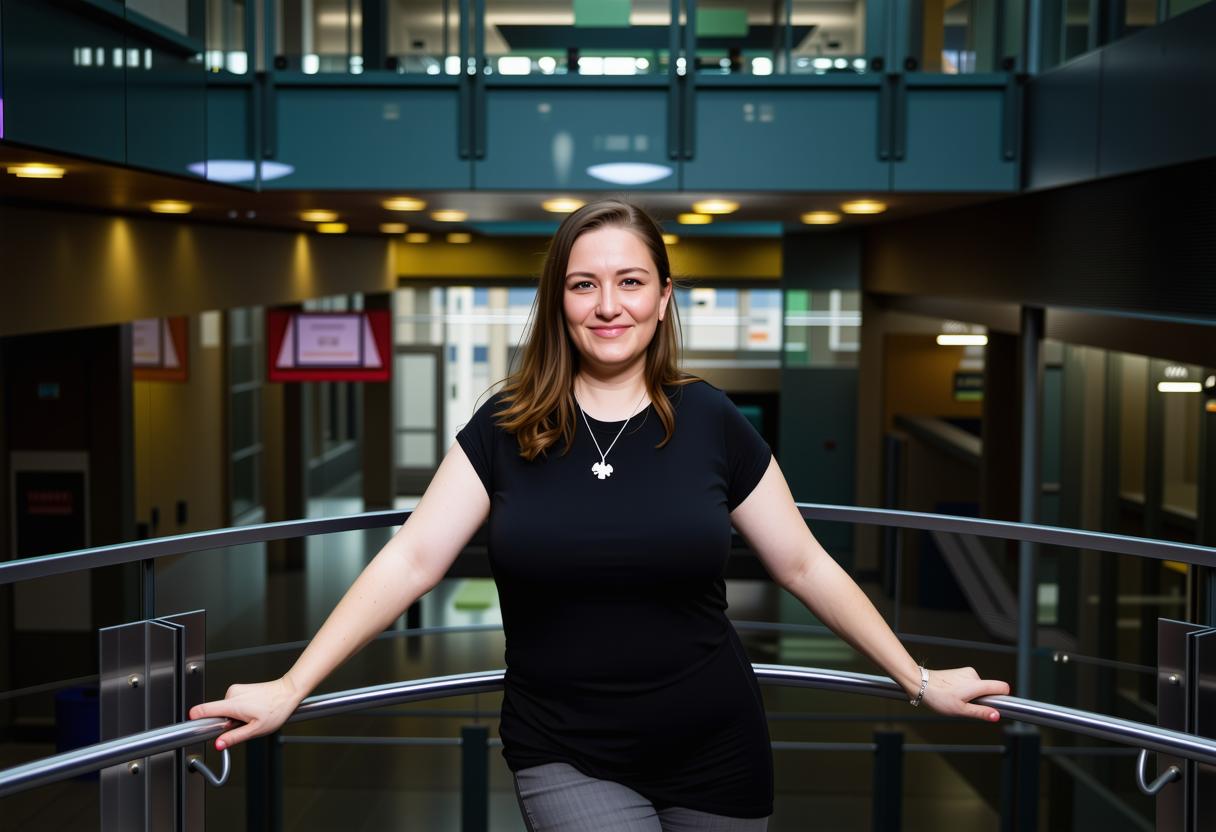
Christina Flynn: A Journey of Determination and Innovation
Hailing from Phoenix, Christina Flynn faced an extraordinary moment during her master’s exams when she went into labor. She completed the exam before heading to the hospital, a testament to her resilience and dedication. This pivotal experience, intertwined with her personal life, has significantly influenced her academic path.
Inspiration from Family Legacy
Flynn’s fascination with chemistry and engineering was ignited by her grandfather, a World War II innovator who patented resin-impregnated varnishes. “He shared stories about the magic of chemical interactions shaping our world,” Flynn recalls.
In 2011, she earned her bachelor’s degree in chemical engineering from ASU, followed by a master’s in mechanical and aerospace engineering the next year.
A Life-Changing Diagnosis
Years later, as Flynn contemplated pursuing a PhD, her son’s pediatrician delivered life-altering news: a level 3 autism diagnosis. “The severity of his condition meant he was beyond the optimal age for existing therapies,” Flynn explains. This revelation fueled her passion to alleviate the struggles faced by families with delayed autism diagnoses.
Innovative Research at ASU
In 2021, Flynn returned to ASU, collaborating with James Adams and Rosa Krajmalnik-Brown at the Biodesign Center for Health Through Microbiomes. Her research focuses on a biological urine test for early autism spectrum disorder (ASD) diagnosis. This patented technology, now licensed for commercial use, aims to provide universal screening for infants aged 18 to 24 months, facilitating early intervention.
Future Aspirations and Impact
As a Fulton Schools Fellow, Flynn is eager to apply her PhD learnings in chemical engineering to her role as research director at a biotech startup. Her vision is to transform autism from a lifelong condition to one that can be managed and potentially prevented through early intervention. “It’s about instilling hope in families and giving science a head start,” she asserts.
Insights from the Biodesign Institute
Question: What drew you to the Biodesign Institute?
Answer: The institute’s collaborative approach to microbiome science, turning discoveries into health solutions, truly inspired me. Their mission to enhance human health through microbial systems and their success in translating research into real-world applications resonated with me.
Q: What unexpected lessons did you learn at the institute?
A: I was amazed by the institute’s genuine interdisciplinary practice. The synergy created by shared curiosity and scientific rigor has reshaped my understanding of innovation and problem-solving.
Q: What valuable lesson did your mentor impart?
A: Professor Krajmalnik-Brown taught me that scientific growth stems from curiosity, not perfection. Her emphasis on asking insightful questions and listening has encouraged me to challenge assumptions and value intellectual humility.
Q: What advice would you give to current students?
A: Let curiosity and passion guide you, even when the path is uncertain. Embrace challenges as opportunities to learn persistence and empathy. School is about asking deeper questions and finding meaning in discovery.
Q: If awarded a $50 million research grant, what issue would you address?
A: I would focus on understanding the microbial and biochemical foundations of ASD and related conditions. By building a global network, we could accelerate discoveries that lead to early detection and preventive therapies, transforming these conditions from daunting diagnoses to manageable ones.
What's Your Reaction?
 Like
0
Like
0
 Dislike
0
Dislike
0
 Love
0
Love
0
 Funny
0
Funny
0
 Angry
0
Angry
0
 Sad
0
Sad
0
 Wow
0
Wow
0